VETERANS DAY dawns with a new poignancy in 2025. As we contemplate the sacrifices made for our freedom in the past, most notably on shores far away from ours, this year everything is different. Our need for deliverance may not be so far away as in the past.
Our military is pledged by oath to defend our Constitution above all. The high costs of winning and maintaining peace and freedom can only be vindicated through eternalcitizen vigilance and the accurate teaching of history. Those who forget are doomed to repeat, and those who remember become scarce.
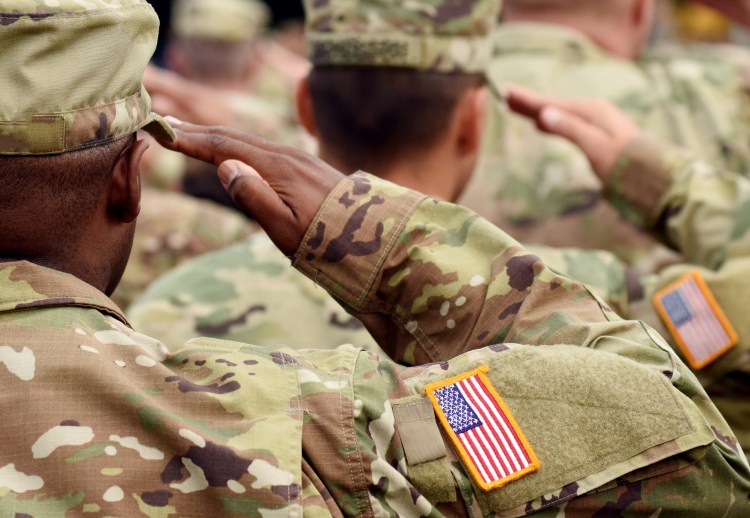
US Army soldier with US flag at a military parade
On this D-day as observed by our allies in Britain, a remarkable testimony from a former Royal Navy serviceman appeared on a national interview, stating clearly that the sacrifices of his fallen comrades in WWII were not worth it given the state of that nation today. The veteran, Alec Penstone, a centenarian, sadly stated:
“My message is, I can see in my mind’s eye those rows and rows of white stones and all the hundreds of my friends and everybody else, that gave their lives – for what? The country of today? …No, I’m sorry – but the sacrifice wasn’t worth the result that it is now… What we fought for was our freedom — we fought for it. Even now, it’s a darn sight worse than when I fought for it.”
The methods of war have changed, as have the terrains on which they are fought, dulling humanity’s ability to recognize the onset of oppression and tyranny. The erosion of FREEDOM takes many forms, the most dangerous of them psychologically subtle. Losses include: (1) the power or right to act, speak or think free of despotic oppression; (2) the sly onset of subjection to foreign domination or gradually invasive domestic despotic government, (3) increasing fears or acts of being imprisoned or enslaved for exercising natural and Constitutional freedoms. These points alone should register loud and clear on our annual Veterans Day.
The fight for freedom has never been confined to distant shores where so many of our soldiers have sacrificed; it is wherever we reside, work, and in the schools we send our children to. We can best honor our veterans by courageously entering the battles closest to us. The power of one is immense. Remembering John F. Kennedy’s words: “Ask not what your country can do for you. Ask what you can do for your country.” Our time is now. It always has been.
By this time next year, if there is a next year, what do we want our hindsight to look like? What will we have done, or not done, in contribution to the outcome?
For related reading, see this site’s article, “The Power of One”.
Copyright 2021 Nancy Diraison/Diraison Publishing. All Rights Reserved. Respectful sharing permitted with credits. Edited November 10, 2025.
IF WE LOVE FREEDOM… FAMILY, COUNTRY, ONE NATION UNDER GOD…
IF WE WANT PEACE, PROSPERITY, SAFETY…. A FUTURE FOR OUR CHILDREN AND THEIR CHILDREN THAT IS WORTHY OF THIS NATION’S POTENTIAL… AS NEVER SEEN BEFORE…
IF WE LOVE ALL OF THE ABOVE AND UNDERSTAND WHAT OUR FLAG STANDS FOR… LIFE, LIBERTY AND THE PURSUIT OF HAPPINESS… OBTAINED AT A GREAT PRICE AND MUCH SACRIFICE BY MANY…
IF WE UNDERSTAND THE PASSION BEHIND THE FAMOUS WORDS: “GIVE ME LIBERTY OR GIVE ME DEATH!”SPOKEN BY PATRICK HENRY AT THE VIRGINIA CONVENTION ON MARCH 23, 1775…
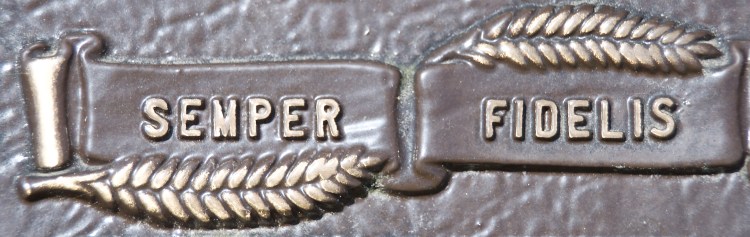
ALWAYS FAITHFUL
THEN LET US BE AS FAITHFUL TO THOSE WHO FIGHT FOR AND DEFEND US AS THEY ARE TO US — THOSE WHO ENDURE HARDSHIPS AND RISK EVERYTHING FOR “WE THE PEOPLE”. MAY GOD PRESERVE THEM AND THEIR FAMILIES, WHATEVER THEIR OCCUPATIONS. LET US PRAY OUR TROOPS BE FORTIFIED, PROTECTED AND GRANTED SUCCESS AS THEY UPHOLD THEIR OATHS, EVEN AS WE LIGHT THEIR WAY WITH OUR UNWAVERING SUPPORT.
JULY 4, 2025 IS A TURNING POINT FOR AMERICA. WHAT THE NATION’S FOUNDERS ENGRAINED INTO ITS FOUNDATIONS MUST BE VIGOROUSLY SEIZED AND RESTORED OR LOST FOREVER. FREEDOM HAS NEVER BEEN “FREE”. IT IS A REWARD FOR COURAGE!
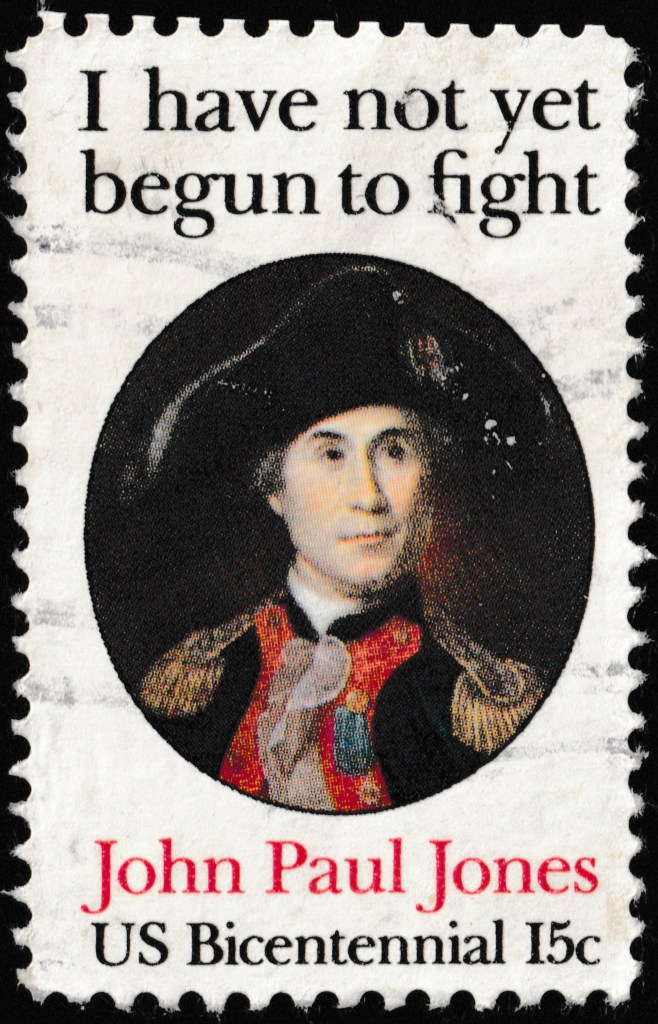
ON SEPTEMBER 23, 1779, FAMOUS REVOLUTIONARY PATRIOT JOHN PAUL JONES, WHILE ENGAGED IN BATTLE OFF THE COAST OF YORKSHIRE, ENGLAND, EXCLAIMED TO THE BRITISH COMMANDER CHALLENGING HIM TO SURRENDER: “I HAVE NOT YET BEGUN TO FIGHT!”
CAPTAIN JONES’ SHIP, THE “BONHOMME RICHARD” WAS FATED TO SINK AFTER THE BATTLE AND AT THE COST OF MANY LIVES, BUT NOT BEFORE HE FORCED BOTH THE BRITISH “SERAPIS” AND ANOTHER TO SURRENDER. HE CAPTURED BOTH!!!
WE CAN BEST HONOR OUR PREDECESSORS BY NEVER GIVING UP. THE HARDER TIMES ARE, THE GREATER THE OPPORTUNITY TO SHINE AS LIGHTS FOR OTHERS…
A perfect storm is the perfect setting for lights to shine in the dark!!!
Suggested reading reference: This site’s article, “The Power of One”.
Fourth Of July Fireworks Over San Diego Bay, California*
Part I of II
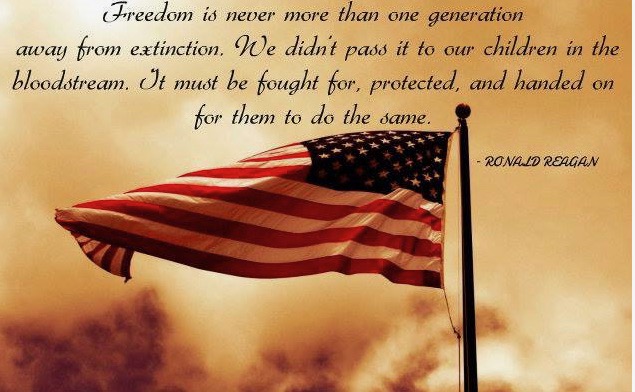
Wherever we will be on this 2025 Independence Day, and whatever we have planned, let’s remember our freedom is NOT FREE. If we don’t fight for it, we can and will lose it. History warns us of that. President Reagan stated: “Freedom is never more than one generation away from extinction. We didn’t pass it to our children in the bloodstream. It must be fought for, protected, and handed on for them to do the same.”
We have already lost much that must be recaptured. The past several years in particular have witnessed painful reminders of the immense jeopardy we are in if we do not fight for what others secured for us at great cost and sacrifice.
Memories have grown dim in this country, but there are some in other nations who have not forgotten their past liberations by the U.S. military. I have seen tears in the eyes of those who remembered for a long time the horrors of war. As children in WWII, many watched their families, towns and lives destroyed. They lived in fear — millions of them — and it was never going to end. Husbands, fathers, brothers, very young boys, were mercilessly gunned down in front of women and children, just for being civilians in the wrong places at the wrong time. Those who experienced it or heard it from their elders point to the precise locations. There was no hope UNTIL the day American tanks rolled into their towns, and the people went wild with joy!
On Liberation Day, August 5, 1945, for one town in Northwestern France — when the first U.S. tank arrived:
At commemorative events, held annually on the anniversaries of their liberation, local citizens and visitors join in singing our U.S. national anthem with the same zeal they hold for their own, laying flowers at the tombs of fallen American soldiers, and honoring our flag. They organize re-enactments of key events, employing restored vehicles, equipment and even uniforms abandoned after the war and carefully restored. For those who participate it wasn’t that long ago. Let us not make their past our future. Who would be our deliverers?
I was privileged to ride in the back seat of this restored American jeep several summers ago when revisiting the trail of General Patton’s Sixth Division in northwestern France. Even the uniforms, etc. were authentic relics. Very sobering considering the forgetfulness our great nation suffers from!
We must fight back and restore what we have been losing. It’s everyone’s job! Quoting again from President Reagan: “Evil is powerless if the good are unafraid!”
Freedom is not lost by accident — it is lost by the design of some and the slumber and neglect of others.
May 31, 2017 / Nancy Diraison (Reposting for Father’s Day, 2025)
This is 2025, and Sunday, June 15, is Father’s Day. I can’t really top the core message of this post I first published in 2017. The message is clear, the damages escalated beyond comprehension, year by year, the longer it takes for common sense and a return to heart-cherished values to reclaim their dominance. The turning point is within reach… the decisions up to each and every individual… I only post something to think about… deeply!
****************************
It was during my first audition with an honored Hollywood voice coach that the question was posed to me — the question which forms part of the backdrop for this website.
In fact the Maestro was not taking any more students. He was 86 years old and had survived numerous health challenges. He had no compunctions about turning students away. Trained as a young man at the Royal Conservatory of Music in Milan, Italy, and after opening to excellent reviews in New York City, he had decided to teach rather than perform. He earned his reputation as the “Hollywood Starmaker”, perhaps a label since applied to others, as this was a long time ago.
I was permitted an audition thanks to the fortuitous referral of an existing student. As the vocal testing proceeded, the Maestro also chatted with me. He wanted only serious students, not the type expecting to become billable superstars in two weeks. (No kidding, he’d seen and rejected quite a few of those). In Milano, they studied hard for ten full years before being allowed to take the stage. A first fiasco is never the recommended way to launch a career. To perform well requires an underpinning of confidence.
At the Maestro’s behest, I explained about my business pursuits, personal interests, goals, etc. There was nothing detailed about my childhood. Near the conclusion of the session, however, this very wise man lowered his head a bit, looked straight into my eyes and asked: “You had a mother at home growing up, didn’t you?” Well, yes, I had. And he said, “I can tell”. And he shook his head. Because Hollywood is full of aspiring and even successful people who never had the luxury he discerned from my past. Wealth measured nothing to what he felt carried more weight with a child than the security and attention of a mother at home. He said he recognized an unmistakable core of confidence evident in those raised in traditional homes.
A mother at home. What does that mean, what does that require, and what does that accomplish?
First, to have a mother at home means there must be another means of support. That means there must be, ideally, a father, husband, provider. Oh, now we’re going back to tradition.
If the father makes it possible for the mother to devote herself entirely to her household and family, that means the children never have to wonder if there’s anyone home to take care of their bruises, answer their questions, help with school work, feed, clothe and otherwise see to their comforts and security. No latchkey syndrome.
Mom is the anchor to the children’s development, if she does her job well. If she does her job exceedingly well, she imparts wisdom, good character lessons and the kind of self-discipline needed for success in life and work later. Her hard work allows the father-husband-provider to focus on his own responsibilities which are huge, because everything rests on his shoulders, and the children can see that, or should. Assuming the father is also doing his job, not just in his career but in the home, we have a secure model for children to develop in.
We’ll have more about that in later blogs.
Is there anything wrong with the traditional picture?
In principle, nothing is wrong with that picture. In practice, because people are imperfect, the model does not often or always work as it should.
So does kicking the model aside solve the problem?
No.
In the end, if the model is broken, everyone suffers, but perhaps the children suffer the most, because going forward into life they have no memory of a working model to replicate.
To live well, like performing, requires an underpinning of confidence. This is what husband-fathers-providers do, or should, or must. To diminish those roles is like building a house on sand, sure to fall in the storms, because houses divided against themselves cannot stand.
More on this later, too.
Copyright 2017 Nancy Diraison/Diraison Publishing. All Rights Reserved.
MEMORIAL DAY… reaching out soberly and in gratitude for all those whose lives have been and continue to be spent in protecting our freedoms — those abroad and those at home. Some will be lost today. Others are remembering the cost they and others have paid. Let us take nothing for granted.
Silent reflection is appropriate, along with the sober realization that if we do not all as “we the people” fight for our freedoms, and support those leading the charge, no efforts to preserve them will endure beyond our current distress. As in 1776, so in 2025. We live in precarious times.
Many in 1776 did not know the nation was in jeopardy; some wrongly clung to an abusive establishment as their comfort zone; only the few led the charge to freedom. REMEMBER! What was won in the past has been forgotten while people slumbered, but reclaiming freedom is the privilege, duty, right and massive reward available to all. Let us all be on the front lines of whatever we can contribute, while there is yet time. Generations to come depend on it. No task is too small, no contribution insignificant.
John F. Kennedy’s most famous quote: “Ask not what your country can do for you, ask what you can do for your country.” This quote, delivered in his inaugural address, encourages civic engagement and service to the nation. It is considered one of the most memorable and inspiring lines in American political history.
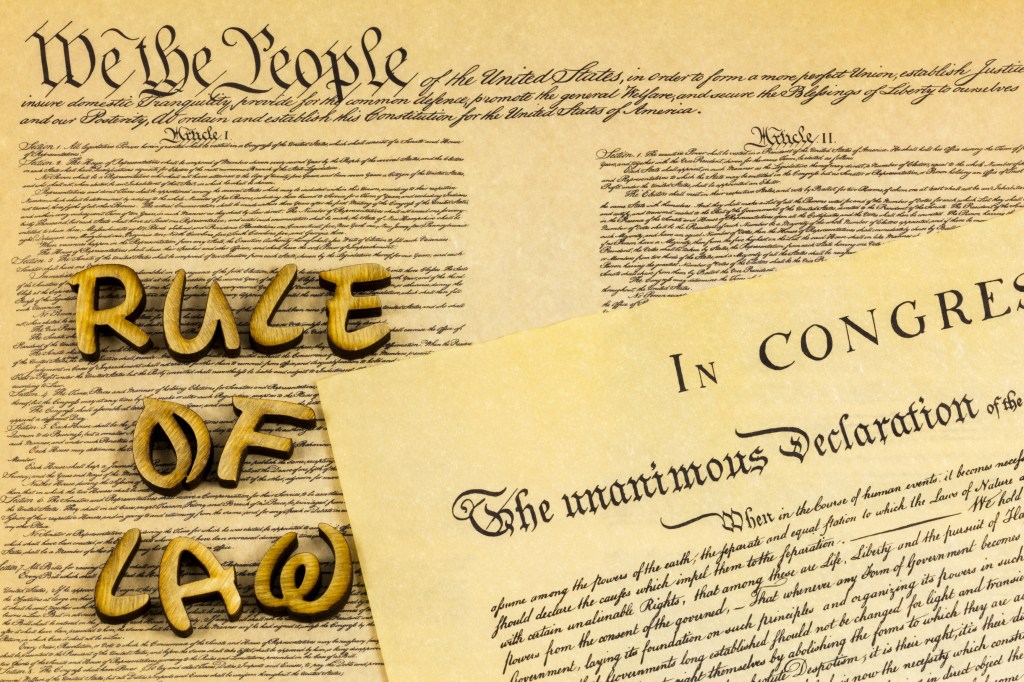
The present war is for our Constitutional freedoms, for a restoration and refinement of justice based on the our foundational documents and the Rule of Law, without which peace will never be attainable.
Those who carry the scars — those who remember and re-enact history for the sake of remembrance… This is their day… We owe gratitude to them and their loved ones for their sacrifices.
We choose to win this war for our future or we lose it.
Copyright Nancy Diraison/Diraison Publishing, May, 2022/2023/2025. All Rights Reserved. (Photos not identified as the author’s are from Dreamstime stock photos).
Previously we have written about “The Power of One” (this site’s August 5, 2020 post), where we focused on how to be that “one” who makes a difference. Roles may be small or large, obvious or discreet, but there is always something for everyone to do. Not all can be Schindler*; we give as we are able. Not all have power. But even in the days of the Underground Railroad, small acts along the way made it possible for others to be helped or saved.
Presently the world is reeling from attacks in a myriad of forms. The illusion of stability is shattered, and only those whose eyes are completely shut would not notice. Many are suffering hardships, some intensely so. Most feel helpless. Can anyone make a dent? Is it even worth trying?
In this article we wish to emphasize the incredible importance of “One”. Too many underestimate what they can do to bolster outcomes. Timidity (lack of courage or confidence) is often what holds people back — not believing they can make a difference. Courage is what conquers timidity. The behaviors are opposites, and both are embedded in habits which can only be broken by the power of human will.
Courage cannot be “gifted”; it must be self-generated one step at a time. One can pray to receive it (along with vital wisdom), but the action belongs to the individual. Free moral agency is granted to us by our Creator, who desires good and hopes we will choose it, but He wills himself not to force it on us. Otherwise we learn nothing, build no character, and remain weak.
How important are the decisions we make? We may have no idea and that’s part of the backbone required to act. There is often no guarantee of outcomes, except that doing nothing leaves nothing in the rear view mirror for us to learn from.
We can gain insights by studying the acts of others who have turned the tide in the past. There are far more unsung heroes than known ones, and some about whom books are written which are well worth reading. Stories emerge from all walks of life, some from military history. “PT 109″(**) is one this author read at an early age, among many others. PT-109 was the 80-foot Elco PT boat (patrol torpedo boat) last commanded by Lieutenant (junior grade) John F. Kennedy, future United States president. The incident occurred in the Solomon Islands campaign of the Pacific theater during World War II when the boat was attacked, cut in two, and sunk, with 2 of the 13 crew members killed instantly. But the rest of the 11 had stories to tell…because they had a leader. In that instance, John F. Kennedy was the “one” who made a difference.
The importance is not in the size of the act, but that it happens at all. A child who stops another from throwing rocks at a puppy or from bullying another has made a difference. It starts small.
The firewall against evil is built one act, one prayer at a time.
One enormous insight, seldom referred to, was recorded by the prophet Ezekiel at a time when his nation was about to be destroyed for its massive moral departures. In Chapter 22, verse 30 (recommended relevant context before and after that verse): “I sought for a man among them who would make a wall, and stand in the gap before Me on behalf of the land, that I should not destroy it, and I found no one.”Notone.
How strong is our impact?
We can be “no one” or we can be “someone”. It’s a choice. All it takes is one, whether others follow or not. That is what takes courage. We can be the firewall. All it takes is one.
Footnote: *Oskar Schindler (born April 28, 1908, Svitavy [Zwittau], Moravia, Austria-Hungary [now in the Czech Republic]—died October 9, 1974, Hildesheim, West Germany) was a German industrialist who, aided by his wife and staff, sheltered approximately 1,100 Jews from the Nazis by employing them in his factories…
**Details on PT-109 history: JFK and PT-109: A Sailor’s Assessment
By Lieutenant Commander Thomas J. Cutler, U.S. Navy (Retired) August 2023, Naval History
For the 1.1 Million U.S. soldiers who perished in its combined wars, we offer a moment of silence on this Memorial Day, 2024.
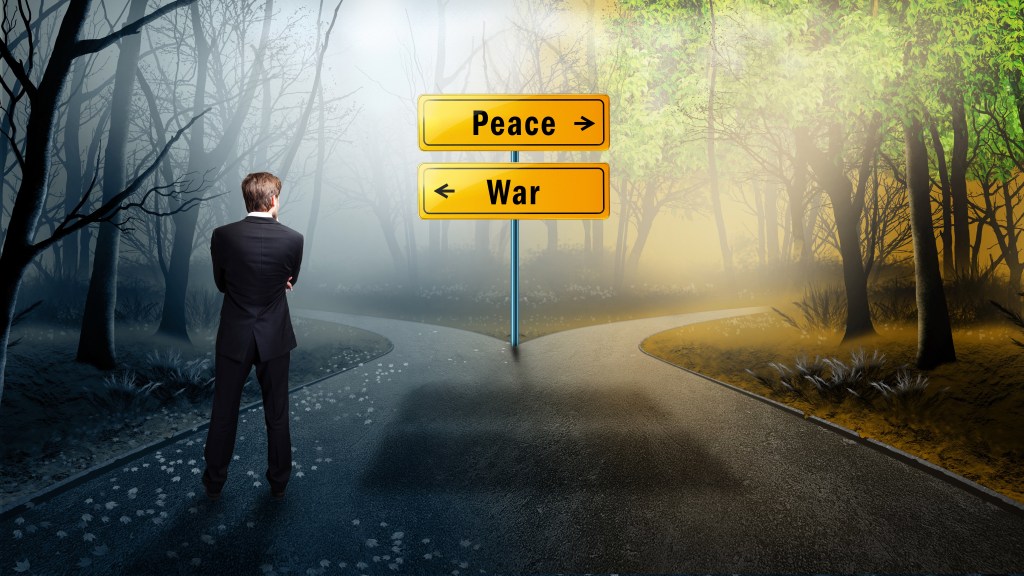
For all those still serving, let us pray for a day when peace prevails over war, when all who serve can come home. This question has become more important during the last 100 years because a century ago most people killed in wars were professionals. At the beginning of the twentieth century only 10%-15% of those who died in war were civilians. In World War 2 more than 50% of those who died were civilians. Those who make the decisions to start wars need to consider:
Kennedy, 1962. “Our goal is not the victory of might but the vindication of right…not peace at the expense of freedom, but both peace and freedom, here in this hemisphere, and, we hope, around the world.
TRUST: Defined as a firm belief in the reliabilty, truth, ability or strength of someone or something.
The word “trust” brings to mind something good, desirable and “safe”. We are inclined to trust someone we know personally and have had time and experience to evaluate. In other cases our trust may be based on the word of others, or a reputation. Trust may often be based on misinformation, or perhaps no information, if we’re just going on “hearsay”.
When we trust, we release worry. We do not have to extraordinarily question or doubt. Feeling safe gives us confidence and freedom to direct our energies in positive directions, which is why we choose to trust to begin with, because it sets us free.
The opposite of trust, of course, is distrust. When we distrust, our natural response is to be anxious or fearful, to greater or lesser degrees, depending on situations — a reason we often lean towards trusting even when doubt is present. It’s easier, may involve some risk, but it’s the optimistic approach.
Examples of who people trust or should be able to trust are family members, followed by friends, co-workers, perhaps even health care providers. We may choose to trust those in teaching capacities and others including people we’ll never meet such as airplane pilots and those who run pre-flight safety checks — the list is endless. Trust is also assumed in everything from the food we eat to products we purchase, where misplaced trust can lead to negative consequences.
People hope to trust those in public service and government jobs because, by default, there is no way to monitor them. Few have the time to research and inform themselves. Ironically, information found is itself often not trustworthy!
Unfortunately, there is far too much blind “trust” placed in idolized entertainment and sports figures, and others under the nebulous label of “experts”. We know nothing of their character, integrity, or even their qualifications, and some, sadly, take full advantage of that information gap to promote ideas and products that lack integrity.
The list of what we can trust is disastrously short! We can absolutely trust that the sun comes up in the morning and goes down at night. Why? Only because that event is not of human origin!
Where Trust starts
The development of trust must begin at birth and be nurtured from that point. The eyes of a child reflect the expectation that he or she will be taken care of, long before that child knows what it needs or how to ask for it. This is the starting point of innocence, and hence the crying need for secure, loving and intact family environments.
Child looking up at [parent] All PHOTO CREDITS posted at end of this article.
During pregnancy, a stressed and overly-anxious mother releases corresponding hormones into her bloodstream which begin to pattern the unborn infant’s responses. Anxiety experienced by a child forms deeply embedded emotional responses. Those responses, before the child has a vocabulary with which to store them, are almost impossible to extricate and explain later in life and may require specialized help to deal with.
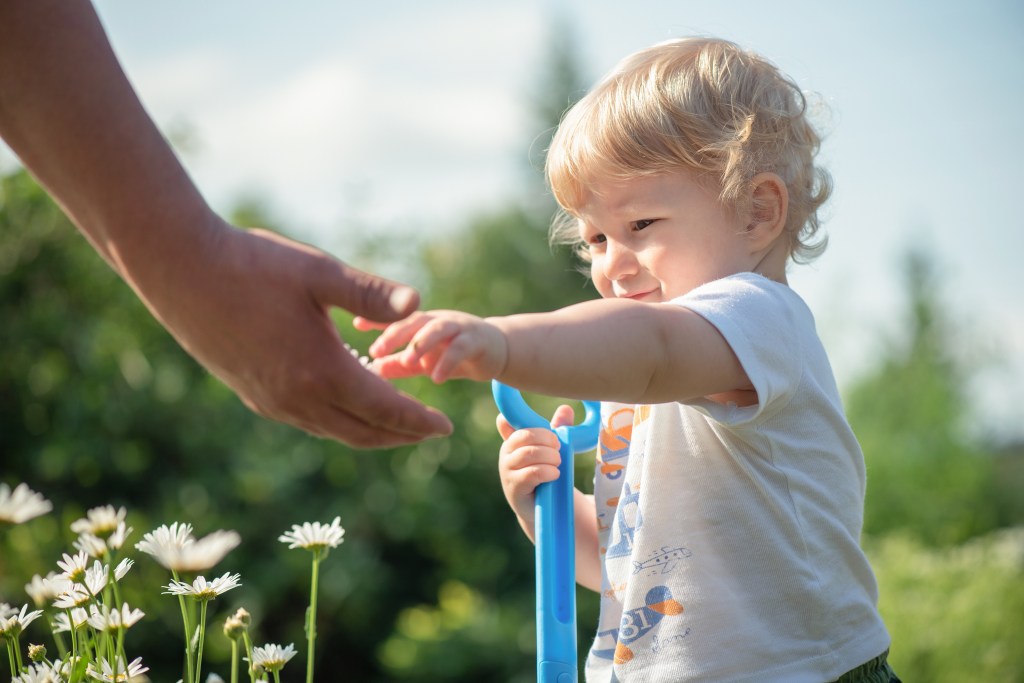
Child reaching for father’s hand
Early in life, the strongest bonds of trust are established through touch, voice and sight, all sensory needs of human beings.
Infants especially need touch. Those who are not touched and held fail to thrive. Studies showed years ago that Nigerian children who were carried on their mothers’ backs spoke and walked far sooner than their Western world counterparts, especially those who, instead of being rocked and held, now spend most of their time in carriers, swings and anything else contrived to free adults from holding them.
Sad.
Losing Trust in a World that separates us
Since technology invaded every aspect of our lives, rather than drawing people closer, it has fractured and distanced personal interactions. [(1) Reference Pew Research link at the end of this article]. Like cold icebergs slowly drifting away from each other, it is common to see kids in schools passing each other in hallways, faces into their phones, texting their best friends as they pass each other without ever looking up. The hallways that used to be filled with laughter and vitality are now eerily silent. Those who have been around more than a few years notice the change acutely.
Device to cloud
The pattern is repeated in homes and elsewhere. Somewhere “up there” is an imaginary “cloud” (i.e. some entity’s central computer which cares nothing about you, the individual) receiving, sorting and re-transmitting words that previously were said face-to-face. Eye contact, facial expressions and body language convey far more than words alone ever can.
“Social media” is a misnomer. It is mostly anything but social, given the decline in social skills documented in job interviews and other venues where human contact skills have clearly deteriorated. Technology itself, while offering the lure of speed and simplicity, is also positioned as a natural scapegoat for errors and accountability, reducing the need to develop skills for conflict resolution. The device never says it’s sorry, and never corrects its own errors.
Most experts agree, and what may shock people, is that 70 to 93 percentof all communication is nonverbal. One of the most well-known research projects on nonverbal communication was led by Dr. Albert Mehrabian [Footnote (2)], a researcher of body language, who first broke down the components of a face-to-face conversation. He found that communication is 55% nonverbal, 38% vocal, and 7% words only (as in texting?). Words make up approximately 7% while pace, tone and pitch make up the remaining 22–23%.
The potential for misinterpretation and misunderstandings without face-to-face contact is enormous.
Eye contact makes it more likely for an individual to be perceived as trustworthy and honest. Maintaining prolonged eye contact signals that an individual is engaged, attentive, and willing to connect on a deeper level.
Employers report great difficulties in evaluating prospective employees due to the lack of eye contact and interpersonal communication skills. One director of a medical clinic reported rejecting a job applicant who prior to showing up for the interview, seemed to be the highly qualified MBA needed for the marketing/communications job. Instead of demonstrating articulate speaking and writing skills at the time of the interview, this applicant filled out the papers presented to her entirely in “text” code, useless to the staff, and displayed very poor communication skills. The interview was cancelled before it started.
Using social media often, in contrast to the trust built in personal interactions, increases feelings of inadequacy, dissatisfaction and isolation. Those feelings negatively affect mood and worsen symptoms of depression, anxiety, and stress.
According to the U.S. Census Bureau Household Pulse Survey, nearly one third of adults (40 Million, 32.3%), reported anxiety and depression symptoms in 2023. Worldwide, anxiety disorders are the most common mental illness.Millions more go unreported as stress levels inevitably affect everyone, including those who manage to cloak it.
Among children anxiety disorders affect one in eight children. The National Institute of Mental Health estimates a lifetime prevalence of 5.9 percent for severe anxiety disorder. Other studies show 36% of older students with anxiety, and 28% with depression. Both anxiety and depression cause a number of diagnosed afflictions. We are now several generations into these problems, compounding as time goes on.
None of the above ailments were ever heard of decades ago.
Understanding trust as a concept mandates expecting that trust will often fail!
If it was possible to “dial-up” who and what can be trusted before finding out through hard experience who and what cannot be trusted, it’s hard to imagine anyone not wanting such a skill or device. We would dodge the bullet at every opportunity and miss developing intuition or learning how to deal with disappointments, which are an inevitable part of life.
Dial up trust
We would experience a similar process to what has been proven to be a side-effect of relying on GPS for directional guidance — a shrinkage and lessened function of the brain’s hippocampus — that part of the brain employed in receiving and storing memories. Relying on external crutches has consequences: “Use it or lose it!”
Evaluating people, situations, and everything we interact with in life has never been guaranteed accuracy. Everyone makes mistakes, and many have been surprised at the behavior of people they misdiagnosed or who simply changed. Treachery is not new in the human experience. King David reported such a breach of trust that shocked him (Ps. 41:9): “Even my own familiar friend, in whom I trusted, who ate my bread, has lifted up his heel against me.” There is also a difference between trust and faith, the latter reaching to an even higher standard and never a reason to dismiss due diligence when dealing with people.
It is up to each individual to develop a personally customized “trustmeter” based on personal experience, memory, vicarious learning from others, studying, observing and critical thinking. Question everything and be vigilant. Guard the boundaries of your own existence. Desire to trust but understand the reality that trustworthiness must be proven, not taken for granted. No one will ever get it right every time.
One thing everyone can “get right” is their own level of trustworthiness. How do we rate ourselves on the “trust” we expect from others? Checking ourselves may enhance our ability and confidence to gauge others, and for certain guard our own self-esteem.
The Greatest Destroyer of Trust
Without a doubt, lying is the greatest and fastest destroyer of trust. It is not to be taken lightly. Once a person, business or other entity has lied to us, the consequence is built in. Trust may be shattered or just dented, depending on severity, but a question continues in the aftermath — can we trust in the future?
Children routinely lie to stay out of trouble. It is a good time to teach the opposite values. Confession takes courage; learning about forgiveness begins at the same time. It’s important to handle these matters with wisdom when dealing with children. Teaching them to avoid actions that may lead to lying is the easiest way to deter lying, and perhaps discourage misbehaviors at the same time!
Lying acts like an eclipse, darkening the perpetrator’s conscience, which has physical consequences. To the astute observer, that darkening may be visible in the eyes of the liar. Lying triggers symptoms of anxiety because it activates the limbic system in the brain, the same area that initiates the “fight or flight” response. The prevention and/or antidote is to tell the truth, confess after errors, even if it’s embarrassing, and pledge not to repeat whatever led to lying to begin with. A lot of lying takes place to protect a weak self-image, which should correct itself when employing the right skills to tell the truth.
Some lie so often the behavior is considered pathological. Pathological lying is defined by some experts as lying five or more times daily, every day, for longer than six months. There are different types of lying with symptoms that are similar to the signs of a pathological liar; those include habitual lying, white lying, and compulsive lying. When it’s a way of life pathological liars cannot be convinced that others are not also pathologically lying. In many cases lies have no motive at all. Psychologists have noted that lying is known to increase heart rate, high blood pressure and to elevate levels of stress hormones in the blood. Over time, that takes a significant toll on mental and physical health.
“I’m fine,” may be the most common small lie people tell, with 60% of people admitting to telling this one. It is often used as a response to the question “How are you?” when a person is not really feeling okay.
It is possible to learn ways to tell the truth in all circumstances — graciously. When we tell lies — regardless of whether they’re big or small — our bodies respond. Having a strong self-image and personal confidence makes it easier to tell the truth.
Flashback to a Time when Trust was more prevalentand why
We should rue the day when “trust” moved so far away from the simple handshake, or the confidence of a word backed up by integrity. When we weren’t being badgered with constant rapid changes to everything that is familiar.
We had a lot less stress when technology was not subjecting us to the equivalent of reorganizing our tools, our files, or everything in our refrigerators without our invitation or permission, as in the form of “updates” on our devices which usually require a new learning curve to master. Change brings on stress. Some changes are beneficial and necessary; others which used to be voluntary are no longer under our control.
There once was such a time of stability, or when changes at least happened slowly. Hard to believe. No virtual or remote communications beyond line-to-line phone calls. If you wanted to see someone, you went there; or vice versa. Meetings were done in person. Papers were filed by well-trained personnel, with up to 100% retrieval rates. No worries, right? No fears of tech issues wiping out databases, etc.
As a jarring example of how much society has changed, consider “the law of the mountain” compared to what may be called “the law of the cloud”.
The “cloud”
Having spent significant time backpacking at high-altitude In the Sierras, and later residing for a time in the Rockies, I learned that clouds are only illusions. They appear and disappear in an instant given minor alterations in atmospheric temperature and humidity. It’s humorous. One moment they are there, the next they are not. The phenomenon is most obvious above 8,000 feet where such mysteries come and go quickly. Such is the nature of clouds.
Mountains, on the other hand, can be depended on to stand for millennia. No one wonders if they’ll be there from one moment, or one day to the next.
At high altitudes there can be sudden, often extremely dangerous weather changes that take place at any time. That is how I learned of a long tradition known as “the law of the mountain”.
That unwritten law/principle was for all seasons. Doors were left unlocked when residents went “down” (literally) to the lower towns for supplies or whatever. That understanding was potentially a life-saving courtesy to visitors or passers-by who might find themselves caught in sudden snowstorms and extreme temperature drops.
The “Law” was very simple, and understood by all. If someone needed emergency shelter, they were allowed to enter a home to warm themselves, eat something if they needed to, do no harm to the premises, and leave a note and enough funds to cover whatever they might have helped themselves to. Nothing bad ever happened; this was the record with the mountain Sheriff’s department, going back decades.
One day a friend from a prosperous California suburb came to visit and what ensued provided a stark reminder of what lack of trust does to people.
We were hiking down the wooded property towards the river, when our visitor suddenly grasped his chest looking like he was about to fall from a heart attack. This gentleman was an older but healthy mountaineer with no known health issues. His words explained his panic: “My wallet!?!!! My wallet!!!“I left my wallet in my car and didn’t lock the doors,” he shouted.
What a relief! It was not a health issue, except for possibly a mental/situational one. Since there were two of us hiking with the visitor, we explained that nothing would happen to either his car or his wallet, which was parked near the house, which, to the visitor’s shock, he learned wasn’t locked either. Nevertheless my brother decided to bound up the mountain to retrieve the item so our friend could place it where he felt it safe — in his shirt — where he could nervously tap it every five minutes to make sure it was still there. Kind of the way people today are constantly checking their phones, for “fear of missing out” on something (“FOMO” in the current jargon!).
The episode was a concise reminder of how corrosive lack of trust is. Now many years later, when all a person’s valuable and personal data is stored in a phone, what could possibly go wrong?
What can really be trusted?
First of all, trust and control are closely aligned. The less trust is involved in a situation, the more control we must hold to ourselves.
Serious advice is to get to know people. Face-to-face. Learn to read people. Cut back on texting and replace as many contact opportunities as possible with voice or in person experiences. Once we know someone and have a solid context from which to visualize the person we are communicating with, we diminish the potential for misunderstandings.
Stop blindly trusting. (Yes, that means reading labels!)
Stop delegating important thinking to others. Learn to think critically.
Turn off time-wasting activities and spend more time self-informing. It builds confidence.
If really serious, analyze personal lifestyle choices involving food quality and exercise, as caution with those improve mental clarity and exercise is a great way to reduce stress.
Develop confidence by improving self-trust rather than depending on others. Be prepared to accept your own failings, along with those of others. It’s life!
Accept mistakes along the way. Progress can’t happen without them.
Take personal responsibility for outcomes; dodge the victim mentality.
Train yourself to trust yourself and never let go of faith (in fact, grow in it!).
The problem with TRUST is not TRUST itself — it’s our habit of letting go of the reins and not putting ourselves in charge of how much to trust, when to trust, and when NOT to. When we take personal responsibility for the outcomes, we learn and move on.
How to handle broken trust
Inevitably, sometimes trust is fractured in the most painful ways. Infidelity in a relationship, getting robbed in a business situation… In many such instances trust is not really going to be repaired. Like a piece of paper badly crinkled, it will never smooth out to its original state. Even with forgiveness dark shadows will linger, and in those instances it is sometimes best to move on and close the doors.
Trust, through the worst of times, needs to be anchored in our own sense of self-worth, in our spiritual beliefs, and in those we know we can trust to stand with us through the storm.
Broken trust is an indicator to change direction, not a “stop sign”.
As the author and publisher of this website, I apologize for scant postings of late. Time has taken a strenuous toll the past few years. Everyone is tired, aching for change. The very foundations of our society are shaking, and no one is exempt from the consequences. Still pending publication is my article on “Trust”, which completes a circle of values examined in past articles on “Hope”, “Faith” (others to come) and what is one of the most encouraging “The Power of One”.
Humanity has reached a point of irreversible crossroads. Perhaps the delay in publishing thoughts on “Trust” will render them more meaningful on the other side of the finish line — assuming it is crossed in time. Misdirected concepts of “trust” need re-education as they undermine individual responsibility as the only solid foundation for freedom. America’s guiding light for freedom has always been it’s Constitution, but it has been undermined by the neglect of the governed. Delegating freedom is a sure path to destruction.
As President Ronald Reagan stated:
And as President John F. Kennedy stated:
Whatever our assignment, no effort is too small to count.
Let us pray for those in the front lines of the global war for freedom, without abdicating our individual tasks, however small. I refer again to this site’s article, “The Power of One”, which explains how to begin. Courage is the key to deliverance. Our warriors must not fight alone.
Copyright Nancy Diraison/Diraison Publishing, February 1, 2024. All Rights Reserved.Respectful sharing permitted with appropriate credit.




















 Real Women Fight Back