
TRUST: Defined as a firm belief in the reliabilty, truth, ability or strength of someone or something.
The word “trust” brings to mind something good, desirable and “safe”. We are inclined to trust someone we know personally and have had time and experience to evaluate. In other cases our trust may be based on the word of others, or a reputation. Trust may often be based on misinformation, or perhaps no information, if we’re just going on “hearsay”.
When we trust, we release worry. We do not have to extraordinarily question or doubt. Feeling safe gives us confidence and freedom to direct our energies in positive directions, which is why we choose to trust to begin with, because it sets us free.
The opposite of trust, of course, is distrust. When we distrust, our natural response is to be anxious or fearful, to greater or lesser degrees, depending on situations — a reason we often lean towards trusting even when doubt is present. It’s easier, may involve some risk, but it’s the optimistic approach.
Examples of who people trust or should be able to trust are family members, followed by friends, co-workers, perhaps even health care providers. We may choose to trust those in teaching capacities and others including people we’ll never meet such as airplane pilots and those who run pre-flight safety checks — the list is endless. Trust is also assumed in everything from the food we eat to products we purchase, where misplaced trust can lead to negative consequences.
People hope to trust those in public service and government jobs because, by default, there is no way to monitor them. Few have the time to research and inform themselves. Ironically, information found is itself often not trustworthy!
Unfortunately, there is far too much blind “trust” placed in idolized entertainment and sports figures, and others under the nebulous label of “experts”. We know nothing of their character, integrity, or even their qualifications, and some, sadly, take full advantage of that information gap to promote ideas and products that lack integrity.
The list of what we can trust is disastrously short! We can absolutely trust that the sun comes up in the morning and goes down at night. Why? Only because that event is not of human origin!
Where Trust starts
The development of trust must begin at birth and be nurtured from that point. The eyes of a child reflect the expectation that he or she will be taken care of, long before that child knows what it needs or how to ask for it. This is the starting point of innocence, and hence the crying need for secure, loving and intact family environments.

During pregnancy, a stressed and overly-anxious mother releases corresponding hormones into her bloodstream which begin to pattern the unborn infant’s responses. Anxiety experienced by a child forms deeply embedded emotional responses. Those responses, before the child has a vocabulary with which to store them, are almost impossible to extricate and explain later in life and may require specialized help to deal with.
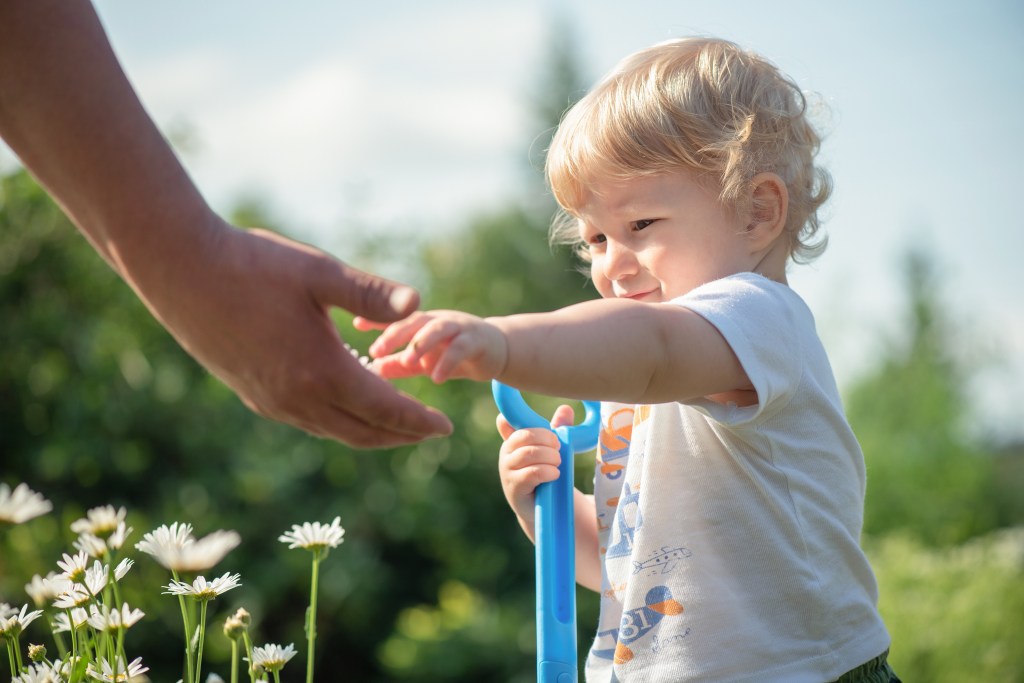
Early in life, the strongest bonds of trust are established through touch, voice and sight, all sensory needs of human beings.
Infants especially need touch. Those who are not touched and held fail to thrive. Studies showed years ago that Nigerian children who were carried on their mothers’ backs spoke and walked far sooner than their Western world counterparts, especially those who, instead of being rocked and held, now spend most of their time in carriers, swings and anything else contrived to free adults from holding them.
Sad.
Losing Trust in a World that separates us
Since technology invaded every aspect of our lives, rather than drawing people closer, it has fractured and distanced personal interactions. [(1) Reference Pew Research link at the end of this article]. Like cold icebergs slowly drifting away from each other, it is common to see kids in schools passing each other in hallways, faces into their phones, texting their best friends as they pass each other without ever looking up. The hallways that used to be filled with laughter and vitality are now eerily silent. Those who have been around more than a few years notice the change acutely.

The pattern is repeated in homes and elsewhere. Somewhere “up there” is an imaginary “cloud” (i.e. some entity’s central computer which cares nothing about you, the individual) receiving, sorting and re-transmitting words that previously were said face-to-face. Eye contact, facial expressions and body language convey far more than words alone ever can.
“Social media” is a misnomer. It is mostly anything but social, given the decline in social skills documented in job interviews and other venues where human contact skills have clearly deteriorated. Technology itself, while offering the lure of speed and simplicity, is also positioned as a natural scapegoat for errors and accountability, reducing the need to develop skills for conflict resolution. The device never says it’s sorry, and never corrects its own errors.
Most experts agree, and what may shock people, is that 70 to 93 percent of all communication is nonverbal. One of the most well-known research projects on nonverbal communication was led by Dr. Albert Mehrabian [Footnote (2)], a researcher of body language, who first broke down the components of a face-to-face conversation. He found that communication is 55% nonverbal, 38% vocal, and 7% words only (as in texting?). Words make up approximately 7% while pace, tone and pitch make up the remaining 22–23%.
The potential for misinterpretation and misunderstandings without face-to-face contact is enormous.
Eye contact makes it more likely for an individual to be perceived as trustworthy and honest. Maintaining prolonged eye contact signals that an individual is engaged, attentive, and willing to connect on a deeper level.
Employers report great difficulties in evaluating prospective employees due to the lack of eye contact and interpersonal communication skills. One director of a medical clinic reported rejecting a job applicant who prior to showing up for the interview, seemed to be the highly qualified MBA needed for the marketing/communications job. Instead of demonstrating articulate speaking and writing skills at the time of the interview, this applicant filled out the papers presented to her entirely in “text” code, useless to the staff, and displayed very poor communication skills. The interview was cancelled before it started.
Using social media often, in contrast to the trust built in personal interactions, increases feelings of inadequacy, dissatisfaction and isolation. Those feelings negatively affect mood and worsen symptoms of depression, anxiety, and stress.
According to the U.S. Census Bureau Household Pulse Survey, nearly one third of adults (40 Million, 32.3%), reported anxiety and depression symptoms in 2023. Worldwide, anxiety disorders are the most common mental illness. Millions more go unreported as stress levels inevitably affect everyone, including those who manage to cloak it.
Among children anxiety disorders affect one in eight children. The National Institute of Mental Health estimates a lifetime prevalence of 5.9 percent for severe anxiety disorder. Other studies show 36% of older students with anxiety, and 28% with depression. Both anxiety and depression cause a number of diagnosed afflictions. We are now several generations into these problems, compounding as time goes on.
None of the above ailments were ever heard of decades ago.
Understanding trust as a concept mandates expecting that trust will often fail!
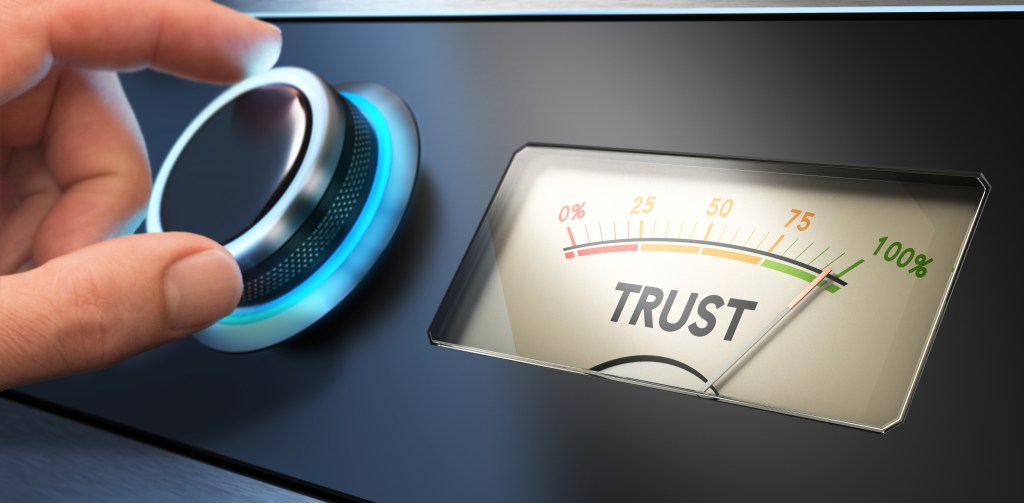
If it was possible to “dial-up” who and what can be trusted before finding out through hard experience who and what cannot be trusted, it’s hard to imagine anyone not wanting such a skill or device. We would dodge the bullet at every opportunity and miss developing intuition or learning how to deal with disappointments, which are an inevitable part of life.
We would experience a similar process to what has been proven to be a side-effect of relying on GPS for directional guidance — a shrinkage and lessened function of the brain’s hippocampus — that part of the brain employed in receiving and storing memories. Relying on external crutches has consequences: “Use it or lose it!”
Evaluating people, situations, and everything we interact with in life has never been guaranteed accuracy. Everyone makes mistakes, and many have been surprised at the behavior of people they misdiagnosed or who simply changed. Treachery is not new in the human experience. King David reported such a breach of trust that shocked him (Ps. 41:9): “Even my own familiar friend, in whom I trusted, who ate my bread, has lifted up his heel against me.” There is also a difference between trust and faith, the latter reaching to an even higher standard and never a reason to dismiss due diligence when dealing with people.
It is up to each individual to develop a personally customized “trustmeter” based on personal experience, memory, vicarious learning from others, studying, observing and critical thinking. Question everything and be vigilant. Guard the boundaries of your own existence. Desire to trust but understand the reality that trustworthiness must be proven, not taken for granted. No one will ever get it right every time.
One thing everyone can “get right” is their own level of trustworthiness. How do we rate ourselves on the “trust” we expect from others? Checking ourselves may enhance our ability and confidence to gauge others, and for certain guard our own self-esteem.
The Greatest Destroyer of Trust
Without a doubt, lying is the greatest and fastest destroyer of trust. It is not to be taken lightly. Once a person, business or other entity has lied to us, the consequence is built in. Trust may be shattered or just dented, depending on severity, but a question continues in the aftermath — can we trust in the future?
Children routinely lie to stay out of trouble. It is a good time to teach the opposite values. Confession takes courage; learning about forgiveness begins at the same time. It’s important to handle these matters with wisdom when dealing with children. Teaching them to avoid actions that may lead to lying is the easiest way to deter lying, and perhaps discourage misbehaviors at the same time!
Lying acts like an eclipse, darkening the perpetrator’s conscience, which has physical consequences. To the astute observer, that darkening may be visible in the eyes of the liar. Lying triggers symptoms of anxiety because it activates the limbic system in the brain, the same area that initiates the “fight or flight” response. The prevention and/or antidote is to tell the truth, confess after errors, even if it’s embarrassing, and pledge not to repeat whatever led to lying to begin with. A lot of lying takes place to protect a weak self-image, which should correct itself when employing the right skills to tell the truth.
Some lie so often the behavior is considered pathological. Pathological lying is defined by some experts as lying five or more times daily, every day, for longer than six months. There are different types of lying with symptoms that are similar to the signs of a pathological liar; those include habitual lying, white lying, and compulsive lying. When it’s a way of life pathological liars cannot be convinced that others are not also pathologically lying. In many cases lies have no motive at all. Psychologists have noted that lying is known to increase heart rate, high blood pressure and to elevate levels of stress hormones in the blood. Over time, that takes a significant toll on mental and physical health.
“I’m fine,” may be the most common small lie people tell, with 60% of people admitting to telling this one. It is often used as a response to the question “How are you?” when a person is not really feeling okay.
It is possible to learn ways to tell the truth in all circumstances — graciously. When we tell lies — regardless of whether they’re big or small — our bodies respond. Having a strong self-image and personal confidence makes it easier to tell the truth.
Flashback to a Time when Trust was more prevalent and why
We should rue the day when “trust” moved so far away from the simple handshake, or the confidence of a word backed up by integrity. When we weren’t being badgered with constant rapid changes to everything that is familiar.
We had a lot less stress when technology was not subjecting us to the equivalent of reorganizing our tools, our files, or everything in our refrigerators without our invitation or permission, as in the form of “updates” on our devices which usually require a new learning curve to master. Change brings on stress. Some changes are beneficial and necessary; others which used to be voluntary are no longer under our control.
There once was such a time of stability, or when changes at least happened slowly. Hard to believe. No virtual or remote communications beyond line-to-line phone calls. If you wanted to see someone, you went there; or vice versa. Meetings were done in person. Papers were filed by well-trained personnel, with up to 100% retrieval rates. No worries, right? No fears of tech issues wiping out databases, etc.
As a jarring example of how much society has changed, consider “the law of the mountain” compared to what may be called “the law of the cloud”.

Having spent significant time backpacking at high-altitude In the Sierras, and later residing for a time in the Rockies, I learned that clouds are only illusions. They appear and disappear in an instant given minor alterations in atmospheric temperature and humidity. It’s humorous. One moment they are there, the next they are not. The phenomenon is most obvious above 8,000 feet where such mysteries come and go quickly. Such is the nature of clouds.

Mountains, on the other hand, can be depended on to stand for millennia. No one wonders if they’ll be there from one moment, or one day to the next.
At high altitudes there can be sudden, often extremely dangerous weather changes that take place at any time. That is how I learned of a long tradition known as “the law of the mountain”.
That unwritten law/principle was for all seasons. Doors were left unlocked when residents went “down” (literally) to the lower towns for supplies or whatever. That understanding was potentially a life-saving courtesy to visitors or passers-by who might find themselves caught in sudden snowstorms and extreme temperature drops.
The “Law” was very simple, and understood by all. If someone needed emergency shelter, they were allowed to enter a home to warm themselves, eat something if they needed to, do no harm to the premises, and leave a note and enough funds to cover whatever they might have helped themselves to. Nothing bad ever happened; this was the record with the mountain Sheriff’s department, going back decades.
One day a friend from a prosperous California suburb came to visit and what ensued provided a stark reminder of what lack of trust does to people.
We were hiking down the wooded property towards the river, when our visitor suddenly grasped his chest looking like he was about to fall from a heart attack. This gentleman was an older but healthy mountaineer with no known health issues. His words explained his panic: “My wallet!?!!! My wallet!!!“I left my wallet in my car and didn’t lock the doors,” he shouted.
What a relief! It was not a health issue, except for possibly a mental/situational one. Since there were two of us hiking with the visitor, we explained that nothing would happen to either his car or his wallet, which was parked near the house, which, to the visitor’s shock, he learned wasn’t locked either. Nevertheless my brother decided to bound up the mountain to retrieve the item so our friend could place it where he felt it safe — in his shirt — where he could nervously tap it every five minutes to make sure it was still there. Kind of the way people today are constantly checking their phones, for “fear of missing out” on something (“FOMO” in the current jargon!).
The episode was a concise reminder of how corrosive lack of trust is. Now many years later, when all a person’s valuable and personal data is stored in a phone, what could possibly go wrong?
What can really be trusted?
First of all, trust and control are closely aligned. The less trust is involved in a situation, the more control we must hold to ourselves.
Serious advice is to get to know people. Face-to-face. Learn to read people. Cut back on texting and replace as many contact opportunities as possible with voice or in person experiences. Once we know someone and have a solid context from which to visualize the person we are communicating with, we diminish the potential for misunderstandings.
Stop blindly trusting. (Yes, that means reading labels!)
Stop delegating important thinking to others. Learn to think critically.
Turn off time-wasting activities and spend more time self-informing. It builds confidence.
If really serious, analyze personal lifestyle choices involving food quality and exercise, as caution with those improve mental clarity and exercise is a great way to reduce stress.
Develop confidence by improving self-trust rather than depending on others. Be prepared to accept your own failings, along with those of others. It’s life!
Accept mistakes along the way. Progress can’t happen without them.
Take personal responsibility for outcomes; dodge the victim mentality.
Train yourself to trust yourself and never let go of faith (in fact, grow in it!).
The problem with TRUST is not TRUST itself — it’s our habit of letting go of the reins and not putting ourselves in charge of how much to trust, when to trust, and when NOT to. When we take personal responsibility for the outcomes, we learn and move on.
How to handle broken trust

Inevitably, sometimes trust is fractured in the most painful ways. Infidelity in a relationship, getting robbed in a business situation… In many such instances trust is not really going to be repaired. Like a piece of paper badly crinkled, it will never smooth out to its original state. Even with forgiveness dark shadows will linger, and in those instances it is sometimes best to move on and close the doors.

Trust, through the worst of times, needs to be anchored in our own sense of self-worth, in our spiritual beliefs, and in those we know we can trust to stand with us through the storm.
Broken trust is an indicator to change direction, not a “stop sign”.
©Copyright 2024 Nancy Diraison/Diraison Publishing. All Rights Reserved.
Respectful sharing permitted with appropriate credits.
Footnotes: (1): Pew Research Center – “Trust and Distrust in America” (Released July 22, 2019) and (2) Albert Mehrabian (born 1939) is Professor Emeritus of Psychology at the University of California, Los Angeles.[1][2] He is best known for his publications on the relative importance of verbal and nonverbal messages.
PHOTO CREDITS:
Featured photo “Trust” Photo 37813605 © Lane Erickson | Dreamstime.com /
Child looking up: dreamstime_xxl_14285632.jpeg
Trust child to father/Photo 186934333 © Natali Filina | Dreamstime.com
Phone to cloud/Photo 30700925 © Cammeraydave | Dreamstime.com
Trust dial/Photo 60385787 © Olivier Le Moal | Dreamstime.com
“Cloud”/Photo 3779480 © Constantin Opris | Dreamstime.com
Mountains/dreamstime_xxl_30000650.jpeg
Arrow to wine glass dreamstime_xxl_2966127.jpg
Broken glass broken trust dreamstime_xxl_205698426.jpg
 Real Women Fight Back